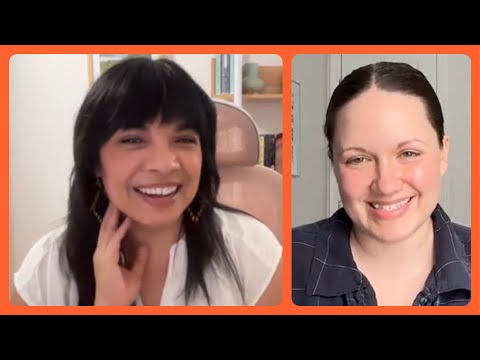
Leaving Big Law to Start Something New
Megan Senese, co-founder of Stage, shares what it took to leave a successful career in big law to launch her own business in legal marketing. From making her leap of faith, to the formation of Stage, Megan maintained a focus on building authentic relationships and empowering other women in professional services.
Transcript
Rachel Mandell (00:00)
Today we're joined by Megan Senese, co-founder of Stage, woman owned business development and marketing boutique that helps law firms, lawyers, and professional services companies build stronger relationships and drive revenue. After years in big law, Megan made an unexpected move. She quit. And just two weeks later, co-launched Stage which she's now been building for the past three years. Welcome, Megan. We're so happy to have you.
Megan Senese (00:22)
Thank you. It's always weird to hear your bio read to you. sitting there, sitting through it. You're like, yeah, yeah. It's just, that's the part where, even if I consider myself to be super extroverted, but then there's moments where I'm like, where people are like, I read what you wrote or here's your bio read back to you. You're like, yeah, cringy feels cringy.
Rachel Mandell (00:31)
It's funny, I spoke to a woman, Henna Pryor this morning, who wrote the book called Good Awkward, and she talks, that's like all she talks about is these moments, and I thought that was very helpful. was like, I could definitely use a book on that.
Megan Senese (00:58)
Mm-hmm. I love that. I've been telling my kids, the weirder, the better. Just be weirder. Just lean into the Yeah.
Rachel Mandell (01:05)
Yeah, I have my kids saying everyone is weird. Being weird is just being your normal self. And I'm like, stick with
So, all right. So read your bio and we speak to a lot of women who are either in transitions professionally or thinking about it. And you did it. You took the leap of faith, left Big Law You were comfortable there for a while. Can you tell us what finally pushed you to go out on your own and what that transition looked and felt like?
Megan Senese (01:23)
Yeah, it's hard to even like, remember what it felt like at that point, because it was pretty shitty, to be honest. And I think right before we popped on, we were talking about COVID and COVID was the like the big catalyst for looking for something else.
And the reason for that was that I was looking for that next step in my career. I was in big law. I'm not a lawyer. I'm business development and legal marketing. So for law firms, it's essentially where you're behind the scenes. You're helping and supporting the lawyers and the lawyers have tremendous amount of pressure. And like any organization, that pressure just keeps like trickling kind of down. So during COVID, it was probably the hardest I've ever worked in my entire career. And I also feel like that's
saying a lot, I put myself through college, I worked two jobs, like two full time jobs when I went through school and just my gallop strength as achiever and discipline. like to say that COVID was the hardest I ever worked was like really just grinding, grinding away. And it wasn't necessarily that I didn't want to work hard as people kept quitting. People kept quitting. And I got an entire person's job and my firm
did compensate me actually pretty, pretty highly for that person's full-time job. But I was still doing two people's jobs and I still had two kids at home during COVID with no childcare. And my husband and I were working full-time and I had just kind of had enough and had reached this point where I had said, this is not sustainable. You had asked me if I could cover this person's job for three months.
You said, let's revisit it. We revisit it. And you were like, yeah, we weren't actually asking you. were telling you. And so that became this push to start looking outward for, I wanted to leave legal. My boss at the time was like, you need to go. Like, I support you. I'll help you. And that boss at the time is actually now my business partner.
It was this like kind of long journey. like outwardly from people who are looking at my story, you know, I love to say in two weeks later we launched because it's good marketing talk, but really this was like a three year kind of journey. If you really, really, if I really dove into it and I remember interviewing for all of these.
positions that were sort of related to legal marketing. So it was like a legal tech company. It would have helped them with their business development and their legal marketing. And I think at the point they were offering me 50 % less than what I was making at the big firm. I was like, I'll take it. And they're like, yeah, like we really just don't think you're going to like be here for the long haul with like that low. Like you put this number, which was already lower than what I had been making, but I was like, I'll just take anything to like start a new position, get out of.
being inside a firm, I've never sold anything before, I understand where I'm coming from. And they were like, yeah, we really don't think you're like gonna be happy here. And a couple months later, I left for $0 and launched my own business. So I always think that's like a funny story. And here we are three years later. It is crazy to think back, like in hindsight, that I took this huge jump.
Rachel Mandell (04:42)
I appreciate you telling the story in detail because I think it's typically a confluence of things that pushes women out. It's not like one experience. It's like a sustained exhaustion because of multiple factors. And it's always a little bit different based on where you're coming from. But the feeling is the same where it's like, it's not sustainable is a refrain we hear all the time or like the math stopped math thing. And we were like, like we got to figure something else out. So.
Megan Senese (05:14)
Yeah. And it was a huge financial risk, right? Like I could have just kept going, making more money. mean, big law pays very nicely. There's golden handcuffs. Whether you're a lawyer or support staff, I was paid a lot of money. And it was this huge family decision essentially to try and make this, which still feels like an insane jump, this insane risk of just jumping off into the deep end with pretty much nothing.
Rachel Mandell (05:39)
I'll just reiterate that it's so true for anyone. feel it's, it's, it feels insane. And then you feel insane. Speaking from my perspective, I still feel insane. Like, I'm like, what am I doing? Like, you know, I went from making good money to not making any money and it actually becomes harder, the longer I've done it. But anyway, I digress. can you tell us about
Megan Senese (05:49)
Well, you have to be a little crazy.
You have to be a little like absurd to believe that it's going to work. you have to be. Yes. Yes, it's fine. I actually talked about, actually talk about that in my podcast. I did a mini episode that came out.
Rachel Mandell (06:04)
you have to i'm like am i delulu like is this like am i delusional
Megan Senese (06:16)
last week where I'm like, you have to be a little bit absurd, delusional in this idea, in this dream that it's going to work because the only person that is really going to make it happen is you. So you have to be a little bit like outrageous and knowing like, I'm going to launch this thing. I'm going to create this thing. I'm going to put everything into this thing. And I believe it's going to work. Even if like no one is believe it, you have to believe it. And it has to be, yeah, you have to be delusional. do that, I think that's great. Yeah.
Rachel Mandell (06:47)
100%. I'm fully there. I'm there.
All right. Would you mind telling us a little bit about how a stage got formed? You mentioned that your partner you used to work with. I'm curious.
Megan Senese (06:54)
Yeah. So at the time we were an entire department. So there was three of us. Now there's just two of us when we launched. And we all gave notice at the same time, at the same day. And
The firm was not pleased. so essentially what happened was my partner, Jen Ramsey said, I have this idea. Actually, she put something on my calendar off our Friday afternoon and it said, good news, promise. Cause I was sort of like, I'm obviously getting fired, right? Like anytime like a calendar shows up on a Friday, you're totally getting fired. And so her concept was imagine if we can do the type of work we like to do with the people that we like to do it, like whenever we want to do it.
And I'm like, uh-huh. Like, what is that? Like, I would love that, but like, that doesn't exist. And she's like, no, I'm, I'm saying we, we create it. And my question at the time was, so you want me to come at work for you? And she was like, not for me, with me. And at that point I had been reporting up to her. And so that's essentially like how it came to be. We, we worked in stealth mode for a really long time, weekends and nights and
all the things while we were still employed. I said yes immediately. And she's like, don't you want to like, maybe think about it? I'm like, no, no, I'm in. I had a panic attack like the entire weekend of being like, I'm going to quit my job. I'm going quit my job. I'm going to quit my job. can't believe I'm going to quit my job. And by Monday, I was like, yeah, no, I'm in. Like, let's do this. And that was like pretty much it. The rest was history. It was like the easiest decision I have ever made.
But I don't think, you know, I had been looking for a while and I had all of this like soul searching and going on these interviews were bigger, bigger pay, bigger title, bigger firms and being like, she still doesn't like, this is everything I had worked for to like move up in AMLA ranking to move up in title to get 20, 30%.
more salary, which is what I did every single time I jumped and negotiate the shit out of my salary. And I just didn't feel like I wanted that. I just was like, what is wrong with me that I'm like saying no, I kept pulling myself out of all of these interviews that I had willingly applied for. So I don't think that would have happened so easily if I hadn't gone through that experience.
Rachel Mandell (09:12)
Yeah, I agree. I want to share too, just because I think this is really helpful to be totally transparent about how it goes down or how it went down for each one of us. I too had an offer that would like, it was like 50 to 75%, not percent, like 50,000 to 75,000 more dollars a year in my salary with like an equity stake. And I
had a conversation with the, and it was a VP of marketing. You know, I've been a senior director. It was, it was a, the use case was exactly where I was coming from. It was like, yeah, geospatial data with a security use case. Like you don't find that every day. And I had this conversation with this dude who was like in the C suite and he cared about.
the differentiation and the vibe was just like, literally could have gotten it. I nailed it. He liked me. was like, I know how to play this conversation. Afterwards, they were like, you want to speak to the director of finance? And I was like, not really. know, and I think about that. I think about that from time to time, but I just like didn't want to do it. And that's, that's another decision in the process towards taking this leap of faith that's it's wild.
Megan Senese (10:34)
You wouldn't have been where you are, right? So I think about the last couple of positions that I said no to, I'm like, I would have stayed. I would have just stayed there and been unhappy. And
I kept imagining that I was going to be 65 years old editing people's bios. And this is important for anyone who works in a law firm is that often, depending on your position and depending on which type of group of lawyers you're supporting, like fixing their bio winds up being like the most important thing you can do, even though it is not important at all. It's like this one of those things where like it has to get done, but it doesn't actually move the needle. And we all know that. And yet it becomes this like urgent sense of like,
timing and so anytime I tell that story that I imagined that was going to be my life and that's why I really quit they're like yes like yeah we understand I'm being a little facetious because there's so many more things that a business developer can do for a lawyer but there's also a lot of shitty stupid things that you wind up doing and that's one of them
Rachel Mandell (11:32)
So you guys are focused on professional service companies. You're coming from a pretty stodgy, big law environment where historically the ways people bring in new business are things where women haven't always been welcome, maybe still not welcome, golf courses, country clubs, old school networks. So how do you guys coach women? to build like strong client relationships outside of those older models.
Megan Senese (12:03)
Yeah. So, so many of our tips and tricks that we learned when we were in Big Law, I just got tired. Like I got tired of them. And essentially what wind up happening is when we first launched, we had no clients, we had no money. And I wanted to try those tactics out myself. Right. So I'm not going to golf. I don't know how to golf. I don't want to golf. It's not something that interests me.
And I essentially at this point had nothing to lose and just like pretty much everything to gain. so for me personally, I started writing on LinkedIn and reaching out to people. And if anyone who's been in a support staff where you're not the revenue driver, like the accountant is or the lawyer is or the salesperson is, there was not a lot of contact with the clients specifically. Your client was the lawyer. And so
this was the first time now that I was going to be in a sales position. And the message had always been, it's really big and like bad and scary out there. And also you're not face to face with the client. like, you don't really know, like the tactics you're recommending as a business developer in-house, you don't really know because you're not facing the client. So I know what works because it works the golf course is what works and like late night martinis is what works. And that might be so.
So when we first launched, I didn't have any clients. And so I'm like, I just have to try things out myself. So I start writing on LinkedIn. And at this point, this is now more than three years ago, I have 500 connections. So I just start connecting with people. And now we launched the business. I wanted to make sure that once I became a vendor that people still wanted to talk to me. So I started to build up my connections. Then I started writing content that I thought would resonate with the legal audience.
and reaching out to people and being real and being authentic and offering gift cards. And for the most part, everything I did in our first year of business was virtual and it started to work. And so I don't like to offer tips that I don't try myself. And so now I get to be able to say, this is what worked when I was in Big Law, but this is also what worked for me to build my book and
This is what works for my clients. And those tactics aren't just networking on the golf course. It's you can do it one to one, right? Maybe if you don't like going to a conference, maybe you go instead of going to one every quarter, because your business development team told you, you just go to one a year, right? And you make it count. And however that works for you. So essentially it's a lot of lot of virtual networking, lot of virtual marketing, but it still has to be connecting with people on an individual basis.
with people you like because if you're gonna spend time away from your friends from your family It has to be with clients that at least align with you somehow, right? At least that's it's more enjoyable for me and the way to do that is sometimes it's also by sharing like what it's like to work with you who are you as a person put up those stories on LinkedIn and so the Weirder I got on LinkedIn the louder I was the more authentic I was the more opportunities came to me and people saw that
And then I've been able to share those stories with other people as well so that they can do it for themselves. Yeah.
Rachel Mandell (15:17)
You mentioned building a book and I think this is a really important concept for women, whether you're inside a professional service firm or building your own business. Can you talk about, I guess, first why it's important to build a book of business when you're inside a firm and then obviously building a book of businesses or like the roster of clients when you're outside.
Megan Senese (15:36)
Yeah, so a lot of the firms that I would work in, some of the lawyers wound up being like service partners to the rainmakers. And historically, that might have been that most of the men were the rainmakers and then the women were the workers or the support staff. And in order to have more autonomy and in order to be able to have more decision-making power, more flexibility,
If you own your book, if you have control over the revenue that you're bringing in, instead of just supporting people all the time, you have so much more power and influence. Also, depending on how your firm is structured, there might be more leverage to the amount of money that you bring in, right? Like every kind of, we all know that. It's like points and different things like that. But so much of those, so much of building your book gives you power.
control, influence to take with you kind of wherever you go next. And so many lawyers will come to us or so many professional services experts will come to us and say like, I, I've been doing this for so long, but like, I'm just servicing other people's business. And I'm literally like chained to my desk. And the only way that they're going to be able to get out from underneath that is to build their own revenue structure inside the firms.
Rachel Mandell (16:49)
Super helpful. Can you tell us what that looks like in terms of going after new clients and if there's any sort of important principles that you'd share with women who are trying to do that?
Megan Senese (16:59)
Yeah. So, I mean, one of the things that's been really like fun is like use your like interest to your advantage. So I had a more junior lawyer who went to this like mommy and me like group.
at a place, at a play group. And there was a couple of her clients were also had similarly situated children in terms of their age. And so I'm like, why don't you just invite her to go? And so that was one way. And so they did, right? And so the two of them went with their babies to this like toddler mommy and me class. And
that worked for her and it's one thing that she did that was different from every other lawyer, right? how are you going to show up in a way that's going to be differentiated? We hear that all the time. So in order to do that, you have to do a lot of the things that I think women do kind of well, was gonna say naturally, but we've been conditioned to to do which is like be thoughtful, be considerate, right? Thinking about other people, we do that all the time.
And so if we start to apply that to, what can our client, what can I add to my client? How can I be unreasonable in my hospitality? Right? I'm in the middle of reading that book right now. So I have somebody who is, their client just became the CEO of a company and we are going to like commission some like handwritten art for this person. This person does like this like fancy art.
and we're going to commission that. And that's like something to lean into that maybe other people aren't doing. It's like, how can you be thoughtful? how can you learn more about that client, that contact, that prospect checking in with them, ⁓ doing things that that person might
Rachel Mandell (18:35)
I think that that's good advice. And I think the idea of one leaning into some, like we have some conditioned and natural strengths for sales. They're just never framed in that way. So that's important. And then the second one is just being creative about developing relationships. I love your emphasis on
Sales is so, it's particularly in the professional service space, so much about relationships. And it's, if that relationship blossoms and grows, if you're outside of an office, outside of a work setting, it's kind of the distinction. That's why, you know, country clubs exist. And, but we can take, we can go to mommy groups, right? Like we can do other, make other successions, particularly when our clients are women too. And then it's like, we're bonding.
Megan Senese (19:07)
Yeah and you know, I don't want to leave out the professional women who aren't mothers. There's so many other opportunities just to connect just as women. We've had people go to like yoga classes or like there's someone who was like, I'm learning how to knit and there's like a, like a workshop. Do you want to come with me? And they somebody, I have another client who did that. And there's just so many different ways that you can be thoughtful.
And, and this point, doesn't necessarily matter, right? If you're a man or woman, but it takes a lot of touches. And I'm like, don't touch me. Right. But it takes a lot of interactions to get to a point where somebody trusts you. I think about any relationship that we have built. It used to be like five to seven interactions before you got to a sale. Now it's more like 10 to 18 interactions. And those can include like an email back and forth.
And I actually would caveat 10 to 18 before you even get to a pitch. And that takes, if you're doing that once a month, it's two years. Like it's a long time, at least for professional services. It's that's how much time it takes to get to that point. And so if you can be thoughtful, if you can stand out from what everybody else is doing, you're going to send like a piece of content, like a say why you're sending the piece of content. Everything you do has to connect for that person and being really thoughtful.
in being relationship focused is going to set you apart from everyone else. Hmm.
Rachel Mandell (20:52)
I wonder for folks who are thinking about starting their own firm, are there anything you see that professional services are consistently missing or like some low hanging fruit that you would say these are missed opportunities? that make a big impact.
Megan Senese (21:10)
I have some biased views on, like, if you're going to go to market, say something different and try not to be... I think so many law firms in particular, there's a big race for second, right? Like, let somebody else decide it and then we'll just come in and kind of mirror or mimic what they've said. And I think there's a big opportunity to...
to stand out and say something that other companies aren't saying and speak more to the needs of what you think people actually need. And so I think a lot of where we at stage have been able to come in is that we're saying, okay, we know that women are underrepresented in terms of bringing in revenue at law firms. And so we speak to them specifically. There's just generally underrepresented voices in law firms historically. And so
One of the things that we have done in the past is to like offer free business development sessions for them. We know that parents are underrepresented in terms of support when they come back from parental leave. So we give them free business development sessions. Like all of that is like time and money out of our pocket, but we believe providing those resources for people. And I think that makes us different. I don't see other legal marketing companies doing that. And so for us, that's one way to...
show up in a way that's saying we care. We're not just saying we care about women because we're a women owned business. We're literally offering people something that they can hold onto and it's money out of our pocket and it's time out of our pocket to support what we're saying. So I think that's like another thing. If you're going to say one thing, then you got to back it up. And I think people want that right now when trust is eroding everywhere, right? If you're going to run around and say that we care about certain things, prove it.
Rachel Mandell (22:53)
Yeah, I think that's really useful. I agree that the relationships are about trust, you know? it just, you know, going into it with the understanding that it takes time, like trust and time go hand hand, and that's just part of the equation. But if you're making the original connection from an authentic place, the likelihood of it being a long-term relationship is so much higher. And I think that's a really good
reminder for everyone, myself included. It's like, don't try to cover all your bases. Just be authentic, identify the gaps that you see, focus on those. And then the people who are the same and see the same and are trying to sort of swim in the same direction will follow
Megan Senese (23:39)
Yeah, it just takes so long and that's frustrating, particularly when you're like, I'm doing everything right, right? Or I feel like I'm doing everything right. Does it even matter? It's like a long, it's a long game. It's such a long game. And the more that I have led authentically and with kindness and empathy, the more clients have found me. And like, that's a, that's a marketer's dream, right? You're like, I just put out content and people contact me. That's what you want. That's literally your dream. Right.
Rachel Mandell (24:05)
Yes, yeah, that sums up marketing pretty well.
Well, this has been really helpful. I know we're talking to a lot of women who are thinking about going out on their own and this will provide not only some great insight for them, but also an introduction to you and stage as well. Can you tell folks where they can find you?
Megan Senese (24:23)
I'm always playing on LinkedIn, so you can find me on LinkedIn, or they can visit us at our website, which is stage.guide. And so we offer business development sessions for any professional who has to build their own book of business. Thanks for having me. Thank you.
Rachel Mandell (24:38)
Awesome. Well, thank you so much for your time. It was a pleasure having you on.