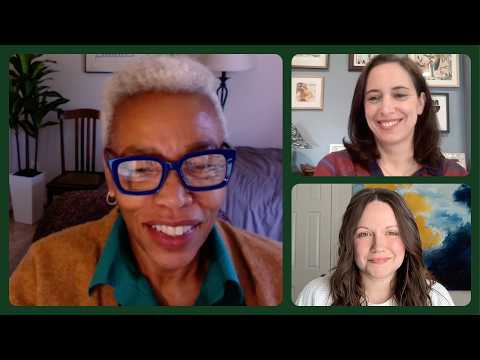
Using Corporate Experience to Become a Successful Solopreneur
Lara Jordan's career path has been non-linear, but built on the foundational relationships and skills she earned in the corporate world. Now running a successful consultant firm, Lara explains how she speaks the language of different teams, what spurred her to branch out on her own, and how she prioritizes flexibility in her work structure.
Transcript
Rachel Mandell (00:00)
Today we'd love to welcome Lara Elisabeth Jordan to our discussion. Lara has 25 years of experience at the intersection of technology, communications, and creative direction. She helps CIOs, CTOs, and enterprise leaders articulate complex strategies and drive transformational change across multi-billion dollar organizations. For the past 14 years, Lara has run her own consultancy where she flexes between being a solopreneur and using a studio model that brings in subcontractors depending on her family needs at any given time. Lara is also a mother of four. Welcome, Lara. We're so happy to have you.
Lara Elisabeth Jordan (00:37)
Thank you. Thank you for having me, Rachael.
Rachel Mandell (00:39)
So let's start at the beginning of your career. I know you worked your way up to eventually managing 150 people globally and setting up an offshore operation in India. But I'm curious what the start of that journey looked like and how that climb went for you.
Lara Elisabeth Jordan (00:58)
Yeah, well, it wasn't a straight line. I would say it was more of a series of somewhat deliberate moves, both up and across functions. My very first job out of college was as a copywriter. Then I pivoted to being a research analyst. My next job was as an online editor — I had some basic HTML skills and when I was a copywriter I had worked on pop-up ads. So that gave me a little bit of background and exposure to digital publishing. I'm dating myself, but this was at a moment when organizations were just starting to take that seriously and move into that content space.
From there, I moved into product management, then leading digital teams, and eventually into running a large in-house content organization where I helped guide a major transition from print to digital. I just kept saying yes to roles that stretched me, roles that made me a little bit uncomfortable, and roles that taught me a new skill set. The real accelerator was learning how to translate between functions. I was able to speak research to analysts, creative to designers, tech to engineers, and ultimately ROI to executives. That made me valuable in a way that wasn't reflected on any org chart, but was key to my success in moving up.
Rachel Mandell (02:13)
I think that's an amazing insight for women who are in the process of moving up — saying yes and being able to speak with a bunch of different teams and disciplines. Do you have any specific advice for women who are on that path that helped you with the different languages you really have to speak?
Lara Elisabeth Jordan (02:34)
I think it's being a good listener at the end of the day and really being able to understand what this person needs and being cognizant of your own best skill sets to figure out how you can meet that need. People often assume that what they need is what their audience needs. They're not listening and changing the way they're asking questions or delivering their information based on that person's unique set of skills and asks.
That's really important when you're flipping between creative people and technical people and executives. They don't want the same thing out of it. Their brains work differently. You really need to stop and put yourself in their shoes and think about what they need in that moment — pivot out of "this is the way I like to communicate" and take that more intuitive, user-focused perspective.
Also, don't be afraid to ask questions. There's no stupid questions. People really fear, especially with technology, that they're going to ask the wrong questions. That's okay. Being curious and open to continuous learning is important. Having a depth and breadth of different communities that you can interact with and speak to and connect ideas is really powerful if you can do it.
Rachel Mandell (03:53)
Can you give us an example of what you would say differently to an executive than to a development team, on the same project?
Lara Elisabeth Jordan (04:02)
Executives are always thinking ROI. They always want to know — how is this going to either help grow the company and make us more money, or save us money? The efficiency play or the growth play. So I'm always looking at things through that lens. If it's a specific project, I'd be looking at how it's going to deliver savings or help accelerate growth in three months versus two years — quantifying that into tangible ROI metrics.
The development team needs clear deliverables. Users need to be able to do X on this timeline. I don't like to tell developers specifically how to build something. But I give very concrete expectations — these features need to be delivered by this timeframe — boxing it into concrete steps. I also give people creative freedom to deliver it how they want, with a very clear expectation of what I'm expecting. And even for technologists, it's good to paint that bigger picture because everybody wants to know how the work they do is meaningful. So I still tie it back to ROI, but I wouldn't give the same level of features and functionality detail that I would for a technical person.
Rachel Mandell (05:31)
That's excellent advice. You worked on some really big projects before you went out on your own. One of those was setting up offshore operations in India. Do you have any specific learnings you want to share or advice for women who are working on big projects or are in that intrapreneur role where they're innovating inside a larger firm?
Lara Elisabeth Jordan (05:59)
Definitely. At the last stage of my corporate career, I was managing a large global team across three continents. Part of that was helping stand up this offshore content operations group in India. It was a big endeavor and it fundamentally reshaped how I think about leadership.
I learned there that being a leader was not having all the answers. I worked on building trust across distance, time zones, and cultural differences. I thought about how to over-communicate and do that in a contextual way. Sometimes, especially with global operations, we're giving tasks without giving context. When you're working cross-culturally, providing context for the why and how you expect the work to get done — a little bit more than you would with a local team — that over-communication is important.
Being very intentional about your own culture and shared values matters too. People need to feel a connected sense to a single mission when you have disparate resources. Another piece, especially if you're designing 24/7 workflows — learning how to hand off work cleanly between geographies, how to build accountability without micromanaging — those were really important skills.
And on a personal level, managing at that scale showed me I could do hard things. That confidence mattered later when I wanted to bet on myself.
Rachel Mandell (08:20)
Thank you. It's such an interesting and amazing opportunity to have earlier in your career.
Lara Elisabeth Jordan (08:28)
It was. And the company I worked for — there were good and bad aspects — but one thing is they were willing to take big bets. And that encouraged me to take big bets on myself. They were willing to say, hey, you're young, you haven't done this before, but I see potential and work ethic. I'm going to throw you into the deep end. And I embraced that mentality of, yeah, I'm a smart person, I can probably figure it out. It's not going to be perfect the first time around, but I wasn't afraid of taking risks. And I was working at a company that took risks on younger people.
Rachel Mandell (09:10)
And those risks ended up paying off.
Lara Elisabeth Jordan (09:13)
I think so. But it was a lot of travel. It was really amazing, but it did not necessarily continue to fulfill what I needed as my whole life shifted.
Rachel Mandell (09:25)
Let's talk about that shift. Can you tell us about what was going on when you were starting to think about making a move outside of that role?
Lara Elisabeth Jordan (09:38)
I had my first son. I think that's probably a typical thing for working women — your world is a little bit rocked. I had been at the same company for maybe 11 years. I'd given birth to my first son, came back from maternity leave, and my world had drastically changed, but the world that I left was pretty much the same. Same meetings, same pace, same expectations.
When I first came back, I was still part-time. I could build a phase-in period for myself, partially because — this is a joke now, but at the time — I went to a daycare center at four months pregnant to get on the list and they told me I was too late. Almost two years before a spot would open.
So I was back part-time because my husband and I were juggling childcare between us. My in-laws were chipping in. I had some babysitters filling in cracks. It was a very thrown-together temporary solution. And of course, my son refused to take a bottle, so my mother-in-law was literally taking him to my work so that I could nurse in between meetings.
There was one day where I was interviewing a candidate that I really wanted. She was amazing. And my childcare fell through. My mother-in-law couldn't come, babysitter couldn't come, my husband had to leave. And I really wanted to have this woman on my team. So I packed my son in the car, brought him to the meeting, and sat there and interviewed her. Everything went great. She thought this was an amazing progressive company and was impressed I was in there with my baby.
But later that day I was pulled aside and reminded that this was a professional office and not my personal daycare center. That was an aha moment where this math stopped working. Not because work wasn't important to me, not because my career ambitions were dismissed once I had a child, but I realized that in that environment I could not be excellent at both motherhood and my job on someone else's timeline and rules. I started thinking about what my next step would be.
Rachel Mandell (11:55)
And how did you go about that next step?
Lara Elisabeth Jordan (11:58)
I was really fortunate to have strong relationships from my corporate career. I had been in senior, high-visibility roles. So I had built that Rolodex of individuals I had a strong relationship with. Before I officially left, I quietly floated the idea of consulting with some people in my network to see if they were interested. And since there was interest, that really built my confidence. And I have to give props to my husband, who was a big cheerleader and said, what's the worst that could happen? You have to go back and find another job. Take a chance on yourself.
Early on my work was fairly broad. I was so nervous about how it would make ends meet. I took on projects across many of the roles I had held in corporate — content, digital strategy, creative. If you're interested in working with me, I'll work with you.
It wasn't until one of my former bosses who was a CIO took on a new role that my current career path and niche crystallized — supporting senior executives, usually technology executives, through technology transformations. Not just in communication and change management, but as a trusted partner, a sounding board, a confidant. I found that combination was pretty rare and deeply needed. I kind of fell into refining what I did best and then using my network to get those first gigs.
Rachel Mandell (13:34)
Now you've been doing this for quite a while, which is so impressive. I mentioned in your bio — I think a lot of women would be curious about this because a lot of women are trying to accomplish what you have. You find your niche, you identify the target people that you can really have a relationship with and support. And one of the benefits of running your own shop is you can set it up how you like, and that can change over time. When we originally talked, I thought it was so interesting that you sometimes work on your own, sometimes bring in contractors, and a lot of those contractors are women who are either on break for parental leave or new mothers, and also women on the path to retirement but not quite ready to fully retire. Can you explain how you use those two models?
Lara Elisabeth Jordan (14:38)
Yeah, across my career I've operated both as a solopreneur and with subcontractors, depending on my bandwidth and where I am in the seasons of my life. I bring in support when projects require specialized skills — if somebody has a video project, I bring in an expert. And also when execution can be delegated without losing quality. I think about — does this work require my specific brain or my specific history of relationships? Or does it require excellent execution that I can oversee?
I've flexed in and out of this model. Sometimes it's based on the fit of the client, but also during seasons when my personal bandwidth is lower. I have four kids now — I only had one when I started consulting. So this brought me through three more pregnancies. During pregnancy and early infancy, I scaled back to being on my own and managing my own days.
I also try to be intentional about bringing in other women who are navigating pivots. Women who've been in corporate and are stepping out to focus on motherhood. People reentering after a career break. People looking to work towards a portfolio career at the end of their corporate career, moving into retirement but not there yet. I'm always interested in working with other women who have similar goals and need flexibility as one of the key values in their current work arrangement.
Rachel Mandell (16:43)
So you mentioned you find some of those women because you worked together previously. Are there other ways you go about finding that type of support?
Lara Elisabeth Jordan (16:51)
Some through referrals, through my network. Others I've met in my off-duty life. I see women who excel in roles at school, managing sports teams, and roles where I can see they have clear leadership skills applied into other aspects of their life. This person made this amazing campaign for an auction. Or she's running a crazy tournament schedule for the soccer team. There are things that translate and speak to you where you know they're going to get it done.
I'm biased to moms, but they know how to get stuff done. You have to wear a lot of hats, do a lot of things. You become much more intentional about how you're using your time. When you bring in someone who has a lot of other balls in the air, they're going to be more disciplined about how they're focusing. They know what they're excellent at, they know where they can leave things behind. People who are a little later in their career or do have other things to balance can be more ruthless in how they spend their time — just focused on what really truly needs to get done.
Rachel Mandell (18:11)
I love that. I love your ability to identify skills that aren't necessarily in the context you need them to be. Do you have a specific ask or how you would phrase inviting someone to work with you?
Lara Elisabeth Jordan (18:24)
It's always best to have some conversations around their interests and where they are in their career. Everything like that begins with a conversation and also being honest about what opportunities I do or do not have to provide. It doesn't always work out. Being candid about that — let's feel this together.
It starts with understanding their work experience, where they're at, what they're looking to get out of working at this moment in their life, and what that needs to look like. And also a hard conversation around prioritization. I like to be as flexible as I can, but if I'm working with a client where there's an expectation of certain hours of in-person meetings during the week — can you do these things?
Being upfront about what the ask is, upfront about what the work is, and then seeing if there's a good fit. Using a trial period of a month or two to say, let's work on this engagement together. Then let's talk honestly about — is the chemistry working? Is it working with the clients? Is it working with your life? Using a pilot mode as a learning experience.
There's challenges too, because you're introducing people to clients and it's an investment of your own time. But I think it's an easier way to know if there's chemistry. A conversation, a cup of coffee, let's talk about values and what you want to get out of things, and then let's look if there's alignment. And then let's work together for a while and see if both of us are feeling like this is what we want right now.
Rachel Mandell (20:07)
I love that approach. It makes it much less stressful and formal and more open and collaborative — saying this is experimental, we can put a rapid timeframe around it, let's see how it goes and keep the dialogue open.
Lara Elisabeth Jordan (20:26)
I use a subcontractor model, which also reduces risk for both of us. I'm not taking on an employee. While I have bread-and-butter clients that make up most of my income, the projects for that client can be unpredictable and that individual's skill set and how they're applied can be. I don't want to over-promise or put myself in a compromising financial position. The subcontractor model works well for people in my role who may not be able to carry even part-time employees full-time if they don't have a predictable portfolio. That may change over time, but this is what I've been most comfortable with, and it gives the entrepreneur flexibility not to be locked in.
Rachel Mandell (21:17)
I think that's an important point about the model and the administrative side.
Lara Elisabeth Jordan (21:26)
There have been points in my career where I thought about building more and building a dedicated team. But given that I've stretched my motherhood years over a very long time — a decade and a half — I have children from ages 16 to four. So that's kept me in this more flexible model. At some point, would I want to grow? Yes, if it wasn't just growth for growth's sake. I'm not looking to build an empire. But for now, subcontracting is an easy toe into that water.
Rachel Mandell (22:14)
I really appreciate your story and your practical advice because you are an example of what a lot of women are aspiring towards — starting really strong in a bigger place, learning as much as they can, getting those opportunities, and then going out and doing their own thing, aligning with their lives and their values and their ambition. And with the ability to control it. Thank you so much for your time and for sharing the specifics of your journey. Is there a place where people can find you?
Lara Elisabeth Jordan (22:49)
LinkedIn is probably the best way to connect. And many women over the years have reached out to me to understand better what I've done. I'm always happy to have a virtual or real cup of coffee to talk about that too.
Rachel Mandell (22:59)
Amazing. Thank you so much. It was great speaking with you.