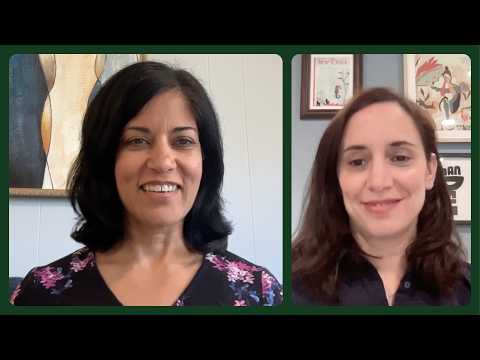
No One Path to Entrepreneurship with Rachel Koretsky
Rachel Koretsky, founder of Upace app and DC Tech and Start-up Week, has spent her career supporting and connecting founders. In this conversation, she shares a unifying starting point for anyone considering launching a business and reflects on the many ways entrepreneurs sustain and grow their ventures over time—reminding us that there is no single path to building a successful business.
Transcript
Rachael Mandell (00:00)
Hi, everyone. Today we are welcoming Rachel Koretsky. Rachel is the founder and CEO of Upace a mobile fitness management platform serving over 200 recreation facilities, YMCAs, and community centers across North America.
Rachel's also founded DC Startup and Tech Week, This October will be the event's 11th anniversary, bringing together the founder and startup communities from around the world. Rachel's also a mom of two young boys and a golden retriever puppy welcome.
Rachel Koretsky (00:29)
Thank you, Rachael I'm so excited to be here today. Thank you for having me.
Rachael Mandell (00:33)
Likewise, I'm glad I attended DC Tech and Startup Week and I saw you on stage and was very impressed with your moderating ability. So I wanted to reach out and learn more about both your companies, Upace and DC Tech and Startup Week and how it got started. So we'll start with Upace because that company has been around and I believe you started it out of college. Can you talk to us about the confidence you had going in to start this company, how you found the gap and what it was like being an early stage founder.
Rachel Koretsky (01:08)
Yeah, so I started the company we're now almost 12 years in for you pace and I started it right after coming out of college. So when I was an undergrad, I studied at American University. At that time, they were starting the now called the Rilorick Center of Entrepreneurship for their incubator program. So I had two amazing professors, Professor White and Professor Bellows, who were taking our class through how do you find a problem and build
a solution for it that is viable for a business. And I was, you know, exploring this idea and concept, and they would have me present to alumni, the dean about them trying to do an incubator program to showcase there's great ideas happening in the classroom, but we need to help support these students to be able to make them a reality.
and given those tools and experiences. And everyone would always ask me, are you gonna do this? Are you gonna start the company? And I was like, I just wanna get through graduation. I'm here for the extra credit. And then after I graduated, I had the moment. I was like, wow, this is something that I actually could pursue. And I had the mentorship of my two professors who took me through every step of first do as many informational interviews as possible. So at that point we were focused on university rec centers.
and I spoke with close to a hundred directors and program managers at universities across the United States and everyone asked me, know, would you actually do this? And I would say like, you know, if we get enough universities and want to pilot it, like I'm going for it. And we were able to do that and started piloting it. A few years later, we pivoted to focus on community rec centers, but having that support of the incubator program and the mentorship gave me that confidence to say,
hey, I can actually do this and knowing that I had mentors to be able to rely on to ask the questions and the incubator and having friends who also were trying to start companies to go through the ups and downs of entrepreneurship.
Rachael Mandell (03:04)
That's an incredible story. it is serendipitous that you had the support of mentors and both people going through it. As a community that has a lot of women either going through a transition or thinking about going through one. in a lot of cases, it's kind of I've been in corporate, I've been at a big firm for a long time and I'm thinking about doing my own thing.
I'd like you to talk a little bit more about the pivots because, you know, we like to emphasize that the leap is great and courageous and important for progress, but it's also can be a really challenging road. Like you said, there's ups and downs and I'm curious how you, what types of pivots you faced and how you dealt with them.
Rachel Koretsky (03:46)
So many. I feel like sometimes people put like pivots as like a negative word, like making a pivot is a bad thing or change is a bad thing. But I think when it comes to like entrepreneurship and as you're building and you're scaling a company, recognizing when you need to make a pivot, whether that's pivoting your target market or making a pivot on product, that is something that allows for more growth and ability to scale. And it shows that you're recognizing the need that you're facing or a problem that you're facing.
and that you're able to be able to adjust on the move. So I think pivot is something that's really strong for a founder to be able to do and something very powerful when they know like they have to make a pivot for the growth of the company to support their team, whatever it may be. I think as people are looking at like pivoting and changing a career, going from corporate to entrepreneurship or whatnot that it might be, I would say my biggest advice and takeaway as you're looking to make that leap is
whatever idea that you have. So if you have an idea of a company that you want to build to do as many informational interviews as possible. That was the best advice that I was given when I got started. And I learned so much through those interviews of things like the problem I thought I was solving for the end buyer didn't really care about that problem. So we had to create a two sided platform. You learning about asking questions like how much would someone be willing to pay and figuring out like what is that?
target market and how much revenue could you generate based on how you're able to penetrate that market. And I think really looking at like, is this an idea that you're passionate about? Some people look at it and say, well, maybe this is a huge addressable market. I wouldn't go for that. But if you don't have the passion behind the problem that you're looking to solve, that makes entrepreneurship very, very hard to do.
It's a roller coaster and I support so many founders and startups through DC Startup and Tech Week and in my journey as a female founder in tech and just having that passion is something really crucial because you're going to have some very, very bad days and very, very good days. But if you're waking up and you are excited to solve your problem and motivated to solve it, think that's when you know like you're ready to make that pivot. If you're feeling that excitement and you've done your due diligence to make sure like you have a target market to go after.
Rachael Mandell (06:10)
So I'm hearing you say, one, it's critical to care about the problem, but you have to really dig deep and identify how the target market wants to solve those particular problems and think about what's feasible. in addition to doing the target market research,
I wonder if you have any specific examples of times as you grow this company now for 12 years where you were sort of tested as a leader or you had to communicate something that was, it could be hard or it could be great, but I'm just curious if there, like what stands out in your mind through this 12 year journey as a sort of inflection point.
Rachel Koretsky (06:55)
I mean, there's so many moments. don't know which one to able to pick and choose from. I think one of my earliest challenges as an early leader, I think is being like a female founder in tech and I'm not a technical female founder. So I had to go through a lot of like hard lessons learned of not hiring like the right development team. And when you're 21, 22 and starting a company, like it's very hard to have like the firing.
conversation like you're not the right fit. And that was something very hard for me to kind of learn, be able to how do you have that, especially when it is someone who is a much older male, you know, of a team and being able to navigate that was really helpful of having mentors and advisors to help me guide that and give the confidence that you could have that conversation. I had to learn
early on, like my gut was telling me like, that's not the person's the right fit, or that might not be the right client. But I would listen to outsiders like, no, that's amazing. This person is really great. But even though I wasn't feeling it right in the inside, I followed some other people's advice and kind of learned the hard way like I should have listened to myself and being able to have that hard conversation than an uncomfortable conversation with someone else. I'm like, you know what, I'm going to go with what I feel like is right, even though I'm not basically looking at like data or anything else, just my own intuition.
So I think that was also a huge lesson I learned in like my first five or six years. There's so many different moments. think like so many like successful moments. think now like what I've seen is like a shift in being a CEO from like your early days. You're kind of wearing all the different hats and functions of being the person doing onboarding, doing the demos of a sale, answering support tickets.
and managing all aspects to now these days. Now it's like we have a team, we have someone who leads our sales and demos, another person on customer support, a VP of client experience, right? So now it's more of the management and going in through different processes and a different style of leadership. So I think that is something that's been really fun for me to be able to evolve from our very early days to having an idea to now having a full team and supporting over 200 community rec centers across the United States and Canada.
Rachael Mandell (09:19)
Amazing. I mean, just listening to you, you can hear the depth and the breadth of the experience that you've earned over the past 12 years. Can you tell us what motivated you to start to co-organize DC Tech and Startup Week? mean, there's obviously a passion overlap, but I'm curious what was the final push to start to execute.
Rachel Koretsky (09:40)
Yeah, so as I said before, being a female founder in tech is hard. And my first year and change, like I was a part of like the incubator program at American University. And then when that stopped, like I felt like the loss of community and like the loss of the education and resources that you need in order to be able to continue to scale. And at the same time, there was a gentleman named Chida who's one of my
great, great friends. And he was looking at starting like an actual week for founders and startups and developers. And through some previous internships, various roles, I had a lot of like event experience and management. And I felt like I needed that need of that community. So like, you know, I want to come in and build it and making sure this is a great place, especially for female founders, to feel a part of and participating because I got so sick of like being
the only female in a room to like at a demo event or the only one pitching the product at these showcases. And I figured I need to change that. And the part of being able to do that was through and starting DC startup and tech week, which is now we just had our 10th anniversary event last October. So now we're going into year 11, which it seems like time has flown so by with it, but really was seeing like a need and a problem, feeling it myself wanting to like force myself out more into the ecosystem and the community and plan the events and programming that I felt like I needed to know and be a part of in order to scale.
Rachael Mandell (11:13)
so cool. And I'll say thank you again for setting it up because as a relatively new founder, I am in one room most of the time. I don't get out. So getting out to an event that is well organized and that where I learned a lot was very energizing for me.
Rachel Koretsky (11:28)
Well, I'm so happy to hear that. That's the goal. You get like stuck and like, especially like working like remotely, it's just like you just stuck home computer diving away at the task. It's so we need to take that step away and just like meeting more people in the community. And we always focus like with actual week. It's like come prepared of like here are five or six problems or challenges I'm having in my business and being able to communicate throughout the week that can be based on what events you attend to. When someone asks you like who sits next to you at an event or at a networking event, how can I help you like to be prepared with that? Like that's the week meant to like actually help you scale and grow and build a community who's there during the bad days and is willing to celebrate you on the good days.
Rachael Mandell (12:15)
100%. So since you've been working on this for 10 plus years and you're interacting with so many founders, I'm curious if there are any sort of themes or challenges that you see come up, particularly for female founders, like what they kind of butt up against at any given point in their growth.
Rachel Koretsky (12:35)
So many different ones. I think it depends upon what industry you're in. If you're looking at female founders in technology, think especially ones that I see all the time, females who aren't technical, it's really hard of building out your technical development team and finding the people that you can trust and is reliable and giving you what you need to be able to scale. I think recently AI has really helped shift in favor for lot of female founders where you can kind of get to an MVP and using platforms like lovable to help you speed up that process significantly. But I think finding like that dev team can be harder as a female founder. I still think female founders like face some like biases of having to like prove ourselves more, even though like it's 2026, we shouldn't have to be able to do that. But I think, you know,
just getting through like some initial like biases for it is something and as a challenge like women often face, I just think you just need to find supporters and a women female tribe. It could be like of a mentor, an advisor, another fellow founder that you could just have that opportunity just like to vent about it and help just give you that confidence to keep moving forward with it.
Rachael Mandell (13:52)
Do you have any perspective on having a co-founder or not? I wonder if that comes up at all.
Rachel Koretsky (13:59)
I think it depends upon the person. For me, I'm the sole founder of Upace And my first six months, I was like, I need to find a co-founder. And I was going, I was searching and specifically trying to find a co-founder with technical experience. And I would talk to so many people. And I realized it's like marrying someone with your business. And that's a huge decision to make. And eventually I didn't find the right fit.
with Upace on what I'm just going to go for it and do it. And I honestly think that was the best decision like for me of doing it. So I think it's looking at what you want like individually. And if you want to have, you know, if you're going full time or part time and if you need a co-founder to help with like that work or if you and your co-founder of different like skill sets, I see that working like extremely well if one is
more developer focus and what is more, you know, sales and operational focus. So it really depends on what you're seeing individually about just say like to make sure that you have like your documents in place, like if you are having a co founder and having those hard conversations around like when we have those tough days, how are we going to get through them? And what does that mean? And also like for
co-founders who have families or have kids or different financial obligations of understanding that piece. When I started my company, I was just coming out of college. I was able to move home with my parents for a little bit just to save money and cost. But now with my husband and two kids, we're at a different place of life. So I think definitely consider that with the team and what works best for you and different working styles.
But I've seen co-founders work magically well together and I've also seen the opposite where co-founders don't magically work together.
Rachael Mandell (15:53)
Yeah, or they work together for a little while while, or maybe even a while well, and then, you know, bigger decisions and more responsibility change the dynamic. So, but I think, you know, to summarize a lot of your points going into entrepreneurship, it is very much about trusting your instinct and if you can train yourself to do that. And also kind of believing that if something doesn't work out, it's, it's okay, or it could potentially be for the better like you're that kind of surrendering of control is important as well because there's only so much you can do.
Rachel Koretsky (16:29)
100 % and what I've always looked into it and as a part of starting Upace of being so young I remember thinking to myself like even if it fails and it doesn't work out like it's such an amazing experience that you want to get anywhere so I think if you're really passionate and someone's listening and wants to start like don't ever be afraid of like the failure because just going after starting a company and going after your dreams that's something that everyone applauds no matter how they may land.
Rachael Mandell (17:00)
I don't want to be a negative here, I'm curious if you have thoughts on people who take the risks, they are entrepreneurs for what, however X amount of years. And then they are like, you know what? I'm going to go back and work in house somewhere full time. If you have seen, and you know, seen that cycle and how it's when, if you know, if you have any insights on that.
Rachel Koretsky (17:25)
I've seen that cycle and I think it just depends upon that person or where they're at. If they're doing that for financial reasons or they need to pivot away for that. I've seen it happen with a company that's locally here where that founder still had a team working on the startup but she went back working in house just to help cover some of the costs to be able to put more money into the business and she was doing like
the start of life nights and weekends, her day kept her day job as like a part of that. So she was going back and forth. So I think it really depends upon the individual case to it and what like those goals might be. But it does happen and happens all the time. And I think it's, you know, looking at, you know, that founder, if you're doing it out of like the financial need, either to sustain you personally or family or to sustain like the business.
And if you do do that, it's, you know, that's okay, right? Like you gotta do what you gotta do to be able to help support what it needs in order to grow. And maybe some people also do it where like they're growing the startup for five years. They built a team, they built a really strong management team and they're ready to pivot and do something different for a period of time. Maybe that passion burn or it's very stressful as well, the life of a founder and just needing to have.
a pause from that. So I've seen that as well. And sometimes I've seen the founder go back. Sometimes I've seen the founder thrive in other areas. And then of course, you have the stories where founders get acquired and a part of the acquisition, they join the company to help support in that transition or they become a full-time role in that. So that's also a huge pivot going from founder and CEO to then becoming an employee of another organization. And that could happen from the merger or the acquisition.
So seeing that happen all the time as well. So I think it just depends on the founder looking at like what is right for them in the moment and making that decision.
Rachael Mandell (19:26)
I really appreciate you sharing those examples because I think it's important as we talk about making transitions as women, like we're coming from systems that maybe haven't been working for us, haven't been aligned with our ambition, our lives. And often we think about starting our own business, whether it's a small professional service business where you're maintaining clients or you're really going to create something original on your own.
For me, it's a disservice to not include the varied experience of entrepreneurs. because you have so much exposure to that, I really appreciate you sharing that it can look differently for different people at different times. you don't usually get that detail where it's not always.
You go off on your own and you stay there and then you grow or something like that. It can take different forms.
Rachel Koretsky (20:14)
And that's like the beauty of like, we've kind of seen it all of all like the good and the bad and everything in between that. But that's just how, you know, entrepreneurship, entrepreneurship is. And it's like, you always say it's like the 1 % of crazy, right? Because like it is a crazy shift and change. But I wouldn't have it other way. Like I love the crazy of a part of it. But.
you definitely have to be ready and excited and wanting to go into the club of the 1 % of crazy.
Rachael Mandell (20:44)
Can you tell us a little bit about DC Tech and Startup Week this year and how folks could find you and the event?
Rachel Koretsky (20:52)
Yeah, so DC Startup and Tech Week is coming up in October. We're about to launch the official dates. I'll share it with you guys here. It's the week of October 19th through the 23rd, so that third week of October. And it's going to be a huge week. We are across the Washington, DC, Maryland, and Virginia region. We're expecting around 10,000 attendees, over 300 events. Every night's a happy hour all day.
From about 10 a.m. to 5 p.m. we have keynote speakers, workshops, panels, fireside chats across 15 stages of content. So anything if you're an early stage founder from having an idea to grow stage founders around how do you get to 1 million, 2 million in sales or grow from one employee to 10 employees to conversations focused on specifically industry attractions like.
consumer product goods or web three, AI, all of these are huge conversations throughout the week. So the event is really a bridge for the community to help anyone in any stage of entrepreneurship, as well as bringing in investors, ecosystem builders, partners that you need to help scale from your lawyers, accountants, you name it, that'll be a part of your growth. And it's just a really fun week. And I say if you're coming and marking it on your calendar, like make sure you're coming with that intention.
of building a community of what you need in order to grow, as well as like, are the things that you need in your business? So picking out those five or six things that you're struggling with or goals that you want to achieve and coming with the week of intention. And it's going to be a really powerful week for you.
Rachael Mandell (22:31)
Incredible. I highly recommend as a a visitor last year. Well, thank you so much for your time and your insights. I really really appreciate it.
Rachel Koretsky (22:39)
Thank you, Rachael I'm so excited to be able to come here. Anyone who's listening in, feel free to always reach out to me directly on LinkedIn at Rachel Koretsky. And feel free to learn more about DC Startup and Tech Week at dcstw.com or about upace, upaceapp.com. And really excited and hope to support anyone who's listening in on your entrepreneurial journey. Don't hesitate to ever reach out. If you need anything or need any connections or support, that is my goal is to be a resource and help founders be able to start and scale.
Rachael Mandell (23:12)
Thank you so much.