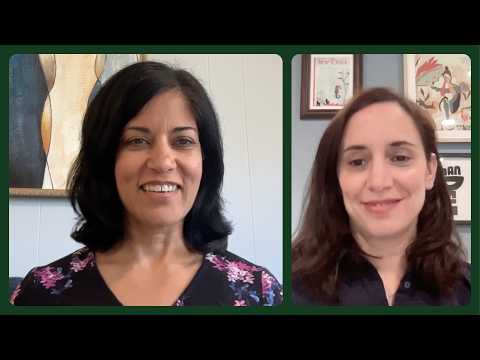
Aviate, Navigate, Communicate: Having Courage in Crises
There are few experiences as intense as those faced in combat. We had the privilege of speaking with Kim "KC" Campbell, a retired Colonel and fighter pilot who served for over 24 years in the Air Force. Her journey is not just about flying combat missions; it’s a lesson in courage, leadership, and the importance of human connection.
Transcript
Rachel Mandell (00:00)
Today we are welcoming Kim KC Campbell, who is a retired Colonel who served in the Air Force for over 24 years as a fighter pilot and senior military leader. She's flown 1,800 hours in the A-10 Warthog, including more than 100 combat missions, protecting troops on the ground in both Iraq and Afghanistan. Kim was awarded the Distinguished Flying Cross for heroism after successfully recovering her battle-damaged airplane after an intense close air support mission. She's the author of Flying in the Face of Fear, a fighter pilot's lessons on leading with courage, and a keynote speaker that equips organizations to lead with courage, build trust, and perform when it matters most. Kim is also a wife and mother of two boys. Thank you so much for your service and for talking to us today.
Kim "KC" Campbell (00:46)
Absolutely. Thank you so much for having me.
Rachel Mandell (00:48)
I just read your bio, but I think it would be super helpful if you told us a little bit about your background in the military before we jump into some questions.
Kim "KC" Campbell (00:56)
I spent 24 years in the Air Force, which I never really thought I would do. My whole dream early on as a 10-year-old was to become a fighter pilot, maybe eventually someday go on and become an astronaut. But I found that I loved serving in the Air Force. I loved my role of supporting troops on the ground. I also got the incredible opportunity to lead teams, both small and large. I just really loved connecting with people and helping them on their journey.
I spent time as a group commander, responsible for over a thousand people — military and civilian — throughout South America, Central America, and the Caribbean. That's one of those jobs where I felt a little outside of my comfort zone getting started. It's that imposter syndrome of, can I really do this? Do I have what it takes? I constantly faced these challenges throughout my career, but I also loved them. I loved the opportunity to lead and get to know people and make a difference in people's lives.
I finished out my career at the Air Force Academy, back where it started. That's where I graduated from. I was able to finish out teaching there and then as the director for the Center for Character and Leadership Development. Full circle, an incredible career. It became time for the next chapter — two teenage boys, and I was ready to be home with them a little bit more.
Rachel Mandell (02:24)
Truly an incredible career, and one filled with high pressure, high consequences. I'd love for you to give us an example of a time when your leadership was tested and share some techniques you've used for leading effectively under extreme stress.
Kim "KC" Campbell (02:46)
Combat is certainly the one that stands out most because those are the times where you're really tested and all the training, all the preparation is what prepares you for that moment.
I'll share a little bit about a mission where I was leading a four-ship of A-10s into Afghanistan. I had worked my way up enough to lead four aircraft. Unfortunately, the weather that day was terrible and we kept having to climb higher and higher to try to get out of the weather. The thing with flying the A-10 is as we climbed higher, some of our systems stopped working.
At one point I completely lost communication with my number four aircraft — the one farthest away from me. My mind goes to the worst. I'm worried that if I can't talk to him, what's happened to him? We're in Afghanistan, in the weather, we don't have a radar where we can see what's out there. I'm worried he's crashed into a mountain. My mind is spiraling. I'm spending all my time focused on him, trying to get him on the radio.
Then at some point I had this realization — hey Kim, you've got three other airplanes in this formation. You have to worry about them as well. So very quickly, I focused on what I needed to do as the leader. I delegated to my number three aircraft to start talking to the other one and trying to find him on the radios, while I focused on leading the whole flight — the one thing I was supposed to be doing — and working our descent into safe airspace to land.
The good news is everything turned out okay. As we were higher up, his radio failed, but once we got lower, we were able to get back in touch with him. I think it's just a reminder that as leaders, sometimes those things can really spiral. We have to remind ourselves — are we focusing on the things that only we should be doing? That bigger picture outlook.
Rachel Mandell (05:35)
As you were telling the story, I was thinking about the fear that can creep in when you have to make a decision while leading. Can you tell us about shifts you make when you know you're going into a variable situation where you'll be thinking on your feet?
Kim "KC" Campbell (05:57)
I think sometimes we get so wrapped up in the word fear, but as leaders, we can feel fear all the time. It's normal, it's human. Every time I got into the cockpit of an A-10, there was a little bit of fear and doubt and worry. I didn't want to let the ground troops down. I didn't want to let my wingmen down.
There are a couple of things for me. One is preparing before we get into those moments. Preparation is everything. When I start to feel that fear, the doubt, the worry creeping in, I go back to preparation. I figure out how I can best put myself into a position of confidence through competence. The more prepared I was, the more competent I became, and the more confident I became.
I use a technique called chair flying, which is really just a visualization technique. In the airplane, we're thinking about what we're doing in the cockpit, but I use it in my everyday life. If I have to have a tough conversation with somebody, including my kids, I like to think through and visualize those things. I like to have that plan of action before going in.
Then once we're in the moment, my other technique is something I learned while air refueling — where we refuel with another aircraft while airborne. It was my first time air refueling, totally terrified of making a mistake. I think my instructor could tell by the way I was flying. He calmly said over the radio, hey KC, wiggle your fingers and toes. Because I had this death grip on the stick. It was just this moment of — take a deep breath, wiggle your fingers and toes, relax. Then it's easier to fall back on that training. Now we're in a calm mindset. Okay, I can do this. I've done this before. I'm ready.
Rachel Mandell (08:03)
I love the three-step approach because even for folks who aren't airborne when they're under pressure, there's a mind-body component plus a preparation component. So if you lose one, you can tap into another. In your book, you mention wingman culture. Can you talk about that and share some examples or lessons from building that type of team?
Kim "KC" Campbell (08:36)
One of the things that has really carried through my time as a pilot — and the thing I miss most — is the wingman, the team, the camaraderie. That sense of having people you can count on no matter what. We talk about somebody who has your six — the six o'clock, the area behind you that you can't see. I think that's so critical as a leader because we have blind spots.
It's about having a wingman, somebody by your side who will tell you the truth. Who will shut the door and say, hey, that talk you just gave to the team — that did not go over well. That's so critical. Someone who will support you when things are hard, but also challenge you to be at your best. That's what a wingman culture is about.
It's also about knowing the role you play on the team and how you contribute to that bigger picture. We all understand how we have to support each other, fill in for each other. If someone's sick or not pulling their weight, we know the role we play. I learned that through flying, but it is so critical in our teams and organizations today.
Rachel Mandell (09:53)
Of all the topics we've discussed, what comes up the most when you're speaking with corporate audiences?
Kim "KC" Campbell (10:03)
Right now, more than anything, it's dealing with adversity, handling uncertainty. We're in a dynamic, crazy environment. How do you stay calm under pressure? How do you move forward when things are tough?
The other thing — I share the story about flying the mission over downtown Baghdad where my airplane was hit with a surface-to-air missile and all of the lessons I learned from that. But I also talk about a story that's more about the human side of leadership. Everybody loves the excitement of the flying stories, but when I talk about the human side, that's what really connects.
I share a story about when I first took command — my very first opportunity to be a squadron commander. This is a very formal ceremony. Airplane behind me, flags, lots of people, formations, strict military customs. In the middle of the ceremony, my three-year-old son decides he wants to come sit with me on stage in my lap.
He slowly makes his way up to the stage, thinking he's invisible because he's moving so slowly. Eventually he gets up on stage and sits in my lap. I'm terrified because I'm so worried about what people are thinking about me. I'm supposed to be this tough, combat-proven fighter pilot, and I have this little three-year-old in my lap.
Then I look at the audience and everybody's smiling. Nobody's sneering or looking in shock. They're just smiling. And I'm thinking — this is what it's all about. This is the human side of leadership. We can be strong and also compassionate. We can be tough and also kind. That moment of having my son in my lap connected me with my team in a way I wouldn't have been able to otherwise. It's that human connection. We're all real. We all have real problems and challenges. We're not perfect. I'm a leader, yes, but I'm also a mom, a wife — all of these things.
That human side of leadership piece is what really connects with audiences. If you have that human leadership, if you have true trust and connection with your team, then you can do hard things. You can overcome adversity. You can build resilience before that tough moment comes.
Rachel Mandell (12:52)
I hope someone got a picture of that because that sounds like an incredible image.
Kim "KC" Campbell (12:56)
I do have a picture. Somebody did, of course.
Rachel Mandell (13:00)
What's so impressive — and also really helpful for folks who haven't been in the military or in situations as intense as yours — is the similarities. The experiences you're explaining with your children, even in the most intense leadership positions, you're still saying that seeing you as a mother and a commander was what really penetrated your team and connected on a deeper level.
Kim "KC" Campbell (13:32)
Absolutely. I think we saw it a lot in COVID, right? We opened people up to our world and our virtual offices with kids coming in the background and cats and dogs. It just made us a little more human, a little more real. There's something that really connects a team when we have these authentic human connections.
Rachel Mandell (13:55)
I really appreciate you sharing that story. I know we talked about not focusing too much on being a woman and a leader because at the end of the day we talk about just leaders leading. But I'm curious if there are any experiences or lessons you'd draw from being a woman in such a place.
Kim "KC" Campbell (14:19)
When I was going into my first fighter squadron, there were about 35 female fighter pilots in the entire United States Air Force out of 3,500. So we're a very small number — about 1 percent. I was nervous. There's that fear again. I knew I was going to have to prove myself. I knew people were watching. There were probably people who thought I didn't belong.
I was worried that if I made a mistake, if I failed in any way, I would ruin it for all the other women who were going to hopefully follow in my footsteps someday. That's a ton of pressure, but that's pressure I put on myself. The positive is that I used that pressure to push me to perform. I turned it into my preparation. I decided I was going to prove I was a good pilot just by doing the work — getting in the books, studying, learning, being willing to listen, sitting on other briefings and debriefings, opening myself up to learn and be a good teammate, a good wingman.
Once I got in the airplane, maybe I sounded different on the radio, but the jet doesn't know the difference. I proved I could perform. And this is advice for anyone going into a new organization — man or woman. You do have to prove yourself. People want to know who you are, what you're about, and how you perform. It's about being credible and capable.
I also think it's good to find a network. There was a group of us — about 35 women pilots — and we created a small group where we could talk. Are you dealing with this? Have you handled that? We got to the point where many of us wanted to be moms. How do we do that when we're grounded as soon as we become pregnant? There were questions we were trying to figure out. Having that support network is key.
And then having allies who will speak up for you. It wasn't always perfect. There were moments that weren't the most comfortable. It was so much nicer when one of the guys in my squadron could say, hey, knock that off — that's not okay. Then I didn't have to say it. I got more comfortable speaking up as time went on, as I proved myself in combat. But early on, it is nice to have allies who will speak up for you.
Rachel Mandell (17:15)
I'm curious about mentors. Were you able to identify leaders above you who would be more supportive?
Kim "KC" Campbell (17:40)
All of my mentors at the time were men. I didn't have any women I connected with in the same space as me. My leadership was incredibly supportive. They were open. They weren't judgmental. They were pretty stern, as they would be with anyone, but it was like — okay, prove yourself in the cockpit. The better you perform, the more you can move up. You start out as a wingman, move up to a flight lead, then you can lead two aircraft, then four, then you become an instructor. I just continued to work hard and prove myself.
In fact, one of my earliest squadron commanders was the person I chose to retire me. Throughout my career, he followed me, gave me advice. We could talk through things. We had different experiences and backgrounds, but my leadership overall gave me an objective opportunity to excel — to prove myself in the airplane and let that speak for itself.
Rachel Mandell (18:51)
I think that's the best definition of a good leader — just give us an objective opportunity to prove ourselves.
Rachel Mandell (18:57)
I know it took a few times before the decision to retire stuck. Can you tell us what the hardest part of that process was?
Kim "KC" Campbell (19:09)
Anytime we make a career transition, it's hard because we get so comfortable. I loved my job. We just got to the point as a family where it was taking its toll on us.
My husband deployed to Afghanistan for a year when I was a commander and I had a one-year-old and a four-year-old. It was a lot. My husband was also an A-10 pilot, also a commander. There were times we were both commanders leading these teams. To this day, I have no idea how we did that — how we did laundry, how we cooked for our kids. We just did it. But there became a point where we could see the stress in our kids. The next path for us to move up was one that was going to take us apart, and we were not in a position to do that. We wanted to raise our kids together.
That was the initial point of — okay, we love what we're doing, but this is not sustainable for us as a family. I had to push the button on the laptop to submit my retirement. I sat there staring at it. Is this really right? Am I going to regret this? Then I submitted it — and then the Air Force reached out and gave us an opportunity to come back to the Air Force Academy together. They offered us a chance to go give back and help the next generation of leaders. It was an assignment together, something stable for our kids.
So we went with that option and spent about two years. Then I submitted my retirement again and COVID hit. They needed somebody to be the director for the Center for Character and Leadership Development. This is 10 days before my final out-processing appointment and the three-star general is calling to offer me the job. I talked to my husband, talked to my kids. We thought, well, it's COVID, we're not going anywhere anyway. One more year.
Then I finally retired after that year. It was a hard decision, but this next chapter has been incredible. So many opportunities, new things I never considered, and so much more time with my family. I've got a senior in high school getting ready to go off to college. I'm grateful I made the decision and I know it's the right one.
Rachel Semenov (21:47)
Now that you've officially retired and you're moving on to the next thing, how are you translating the skills you grew during your time in service? Are there particular skills that have been really useful, or are you having to develop new ones?
Kim "KC" Campbell (22:08)
It's a little bit of both. Writing the book really helped me reflect on the lessons I learned and how they were applicable not just in the military but outside as well.
One example is a common phrase we use in aviation that I realized I used as a leader too — aviate, navigate, communicate. Aviate: you fly the airplane first. You focus on the thing that is most important first. Navigate: figure out where you're going, figure out the path and plan ahead. Communicate: let others know, reach out if you need help. If any sort of crisis or emergency hit in the airplane, it was — aviate, navigate, communicate. That re-centering focus.
What I realized is that in crisis in leadership, the same applied. Aviate first — focus on the things you can control, what's most important. What are the things you have to keep doing to keep from hitting the ground? Navigate — what's the clear path for your team? What are the goals and objectives? Where are the risks? And then communicate — let your team know the way forward and reach out if you need help.
Then there were other things that took more reflection. That moment on April 7th, 2003, where my airplane was hit with a surface-to-air missile — that was a life-altering moment. In a moment of supporting ground troops, focused on the mission, out of nowhere this missile hits the back of my airplane. It's suddenly plunging toward the ground, completely out of control. I'm completely terrified, but time slows down. I take that deep breath, wiggle my fingers and toes, and I'm able to perform in this critical moment and fall back on my training.
I have this incredible wingman by my side helping me through it. I can barely say enough over the radio other than "two's hit." He jumps in immediately, giving me guidance and direction in a way I could hear and understand. I recover this heavily damaged airplane and fly it an hour back home.
It took me probably 20 years to reflect on how I survived that and made a decision in that moment. It's really a framework I still use today. First, preparation — doing the work, studying, seeking out lessons from others. Then practice — the visualization, the chair flying, talking through it with somebody. Then planning for contingencies — thinking through the things that could go wrong and, most importantly, what you're going to do about them. Then letting them go — not focusing on all the terrible things, just knowing enough that you can handle it. Then you execute with confidence because you've put in the work. And then you evaluate your performance when you're done — pull out the lessons learned, learn from every mistake. And then share those lessons. That's how we elevate performance.
That took me 20 years to figure out, but I've used it with so many things — leadership, parenting, everything.
Rachel Mandell (26:58)
We really appreciate you sharing your lessons with us because we can certainly apply them every day. Is there a place where people can find you?
Kim "KC" Campbell (27:09)
The easiest one is through my website because it has links to everything — Kim-KC-Campbell.com. It's got links to all my social media and links to order my book. I would really offer to everyone — if you have a follow-up question, reach out to me. LinkedIn is a great way to do it. There were so many people that helped me on my journey, so many people that shared their lessons and were willing to take the time. I feel like it's so important that we do that for others. So reach out. I'd love to answer the questions.
Rachel Mandell (27:51)
Thank you again for your time. We'll be in touch. Take care.
Kim "KC" Campbell (27:53)
Awesome. Thanks, you too.